Boost Your Business Growth with Cutting-Edge Lead Generation Strategies
Today’s buyers are more informed, selective, and impatient than ever. To keep your pipeline full and revenue growing, you need a modern, data-driven lead generation strategy that attracts, nurtures, and converts high-intent prospects—at scale. In this guide, you’ll learn proven, cutting-edge tactics you can use right now to generate better leads, lower acquisition costs, and accelerate business growth.
Understanding Modern Lead Generation
Lead generation is the process of attracting and capturing interest in your products or services so you can nurture that interest into qualified opportunities and paying customers. Effective lead generation aligns three key components: traffic, conversion, and nurturing.
High-growth businesses focus on:
- Ideal Customer Profile (ICP): Clear definitions of who you want to reach based on firmographics, demographics, behavior, and pain points.
- Multi-channel visibility: Meeting prospects where they are—search engines, social platforms, email, industry sites, marketplaces, and events.
- Frictionless conversion paths: Simple, compelling ways for visitors to raise their hand and become leads.
- Always-on nurturing: Automated, personalized follow-up that builds trust and moves leads toward a decision.
When these elements are aligned with your growth goals and revenue targets, lead generation stops being a guessing game and becomes a predictable, scalable system.
Build a High-Converting Lead Generation Funnel
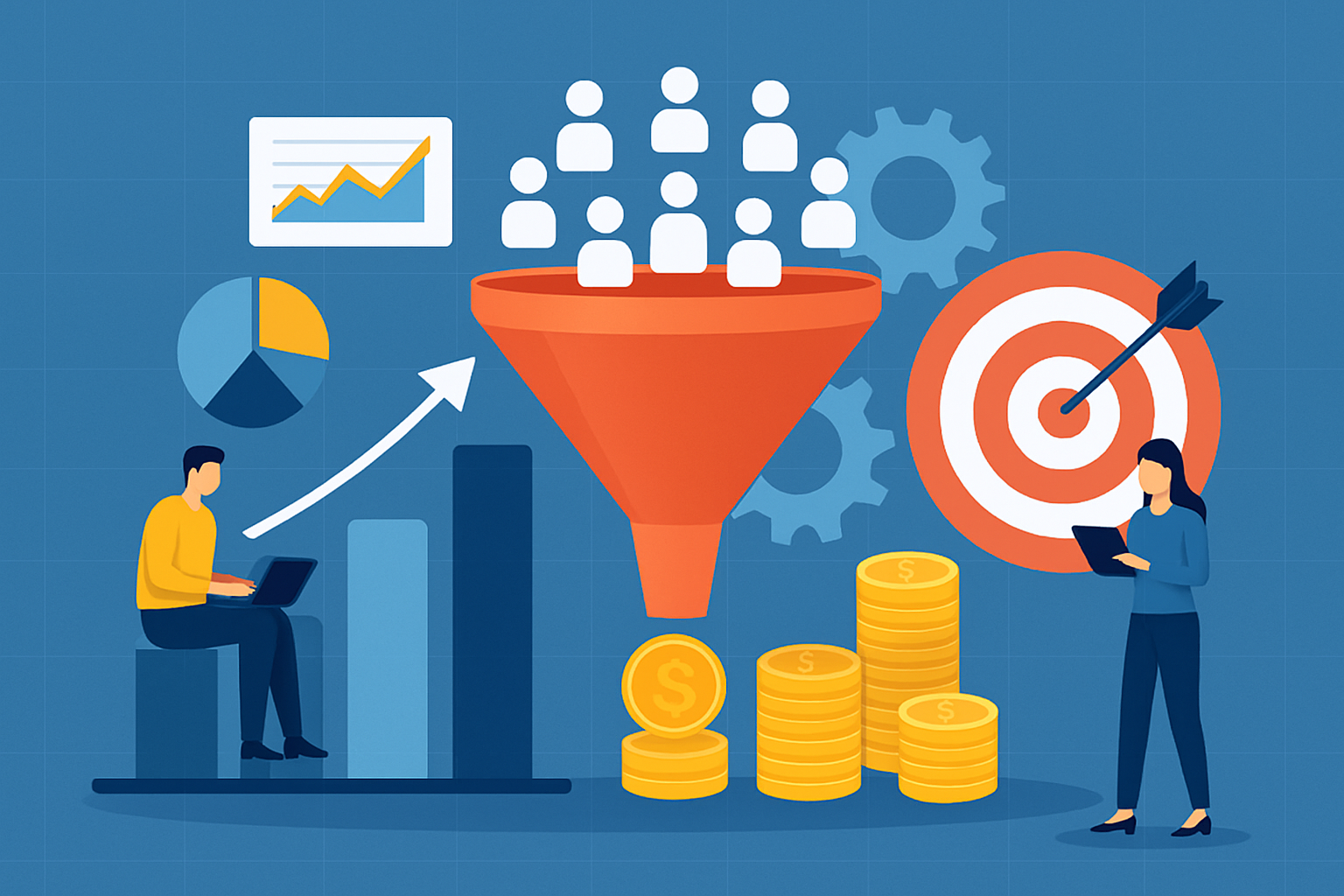
A cutting-edge lead generation strategy is built around a funnel that intentionally guides prospects from awareness to purchase. Think of your funnel in three core stages.
1. Top of Funnel (TOFU): Attract the Right Visitors
The goal at the top of the funnel is to get in front of your ideal buyers with content and offers that solve their problems or answer their questions.
High-impact TOFU tactics include:
- SEO-optimized content: Publish blogs, guides, and resources targeting commercial-intent keywords such as “best [solution] for [industry]”, “[service] pricing”, or “[product] alternatives”.
- Thought leadership: Share expert insights on LinkedIn, X, and niche communities to build authority and attract engaged followers.
- Paid awareness campaigns: Run targeted ads on Google, Meta, and LinkedIn to hyper-specific audiences based on job title, industry, interest, and behavior.
- Video and webinars: Use short-form videos, demos, and educational webinars to showcase outcomes and build trust.
2. Middle of Funnel (MOFU): Capture and Qualify Leads
Once you have relevant traffic, your next job is to convert visitors into leads and gather the right data to qualify them.
Proven MOFU conversion assets include:
- Lead magnets: Offer high-value resources such as templates, calculators, reports, and checklists in exchange for contact details.
- Interactive tools: Use quizzes, ROI calculators, and assessments that provide instant value while capturing buyer intent signals.
- High-converting landing pages: Design focused pages with one primary call-to-action (CTA), social proof, and clear benefits—not just features.
- Chatbots and live chat: Implement conversational experiences that answer questions, qualify leads, and book meetings 24/7.
To ensure quality, use lead scoring to rank leads based on:
- Fit: How closely they match your ICP.
- Engagement: Pages viewed, resources downloaded, emails opened, and links clicked.
- Intent: Actions such as pricing page visits, demo requests, or trial signups.
3. Bottom of Funnel (BOFU): Nurture and Close
At the bottom of the funnel, your focus shifts to helping high-intent leads make a confident purchase decision.
Effective BOFU strategies include:
- Personalized demos: Tailor presentations to the prospect’s use case, showing how you solve their specific challenges.
- Case studies and testimonials: Share proof of results, ROI, and customer success to overcome skepticism.
- Targeted email sequences: Send behavior-based follow-ups that address objections, share comparisons, and surface offers or incentives.
- Sales enablement content: Provide your sales team with playbooks, battlecards, and objection-handling scripts aligned with your campaigns.
Cutting-Edge Digital Channels for Lead Generation
Modern lead generation isn’t about being everywhere—it’s about being highly relevant in the right places. Prioritize these channels for scalable, measurable results.
1. Search Engine Optimization (SEO) and Local SEO
SEO remains one of the highest-ROI channels because it captures demand at the moment people are actively searching for solutions.
Key SEO and local SEO tactics include:
- Keyword clustering: Group related keywords into themes (e.g., “lead generation software”, “B2B lead tools”, “sales pipeline automation”) and build in-depth content hubs around them.
- On-page optimization: Use descriptive title tags, meta descriptions, H1–H3 headings, internal links, and fast, mobile-friendly pages.
- Local SEO (GEO optimization): For regional businesses, optimize for “near me” and city-based searches by:
- Creating dedicated landing pages for each location or service area.
- Optimizing your Google Business Profile with accurate NAP (Name, Address, Phone) and targeted categories.
- Encouraging and responding to local reviews.
- Embedding maps and localized FAQs to increase visibility in local packs.
2. Paid Media and Retargeting
Paid ads allow you to reach high-intent prospects quickly and test offers rapidly.
Focus on:
- Search ads: Target high-intent keywords with clear CTAs such as “Schedule a Demo” or “Get Custom Pricing”.
- Paid social: Run LinkedIn, Meta, and TikTok campaigns using compelling creatives, strong hooks, and lead forms.
- Retargeting: Serve tailored ads to past visitors who viewed key pages but didn’t convert, using time-limited offers or new content.
- Lookalike audiences: Use your best customer data to find similar prospects at scale.
3. Account-Based Marketing (ABM) for B2B
ABM flips the traditional funnel by identifying high-value accounts first, then running hyper-targeted campaigns to engage specific decision-makers.
Successful ABM programs typically include:
- Account lists: Tiered lists of your most valuable target accounts based on revenue, fit, and growth potential.
- Personalized content: Industry- or account-specific landing pages, emails, and ads that speak directly to each company’s challenges.
- Multi-threaded outreach: Coordinated sequences across email, LinkedIn, phone, and events to reach all stakeholders.
- Shared dashboards: Sales and marketing aligned around shared metrics: account engagement, meetings booked, opportunities created, and revenue influenced.
AI-Powered Lead Generation and Automation
Artificial intelligence and automation are transforming lead generation by making it faster, smarter, and more predictable. Integrating the right tools can multiply output without multiplying headcount.
1. AI for Audience Targeting and Segmentation
AI can help you discover patterns and micro-segments that manual analysis would miss.
Use AI to:
- Score leads dynamically: Automatically update lead scores based on real-time behavior and historical conversion data.
- Predict intent: Identify which leads are most likely to book a demo, start a trial, or request pricing.
- Segment campaigns: Tailor messaging by industry, role, company size, and engagement level for higher response rates.
2. AI Content and AIO (AI Optimization)
AIO (AI Optimization) means creating content with AI in mind—from research through promotion—so that your assets are easy to generate, personalize, and scale.
Optimize your lead generation content for AI by:
- Using structured headings: Clear H2/H3 tags and bullet lists make it easier for AI assistants and search engines to understand your content.
- Answering specific questions: Include concise, direct answers to common buyer questions to become a preferred reference for AI tools and featured snippets.
- Repurposing content: Use AI to turn a single webinar into blogs, emails, social posts, ad copy, and lead magnets.
3. Workflow Automation for Scale
Automation keeps your lead engine running 24/7 and ensures fast, consistent follow-up.
Automate workflows such as:
- Lead routing: Automatically assign leads to the right sales rep based on territory, vertical, or account size.
- Drip sequences: Send nurture emails and retargeting campaigns triggered by specific actions (e.g., asset downloads, cart abandonment, or pricing page visits).
- Sales alerts: Notify reps instantly when a high-intent prospect engages with key content so they can follow up in real time.
Optimizing Lead Generation for GEO, Conversions, and Revenue
To turn lead generation into a reliable growth engine, you need constant measurement, optimization, and localization.
1. GEO-Optimized Campaigns
Whether you target multiple countries, regions, or cities, geographic optimization ensures your messaging, offers, and timing match local needs.
Strengthen GEO performance by:
- Localized landing pages: Adapt language, currency, testimonials, and examples to each target market.
- Region-specific offers: Consider local holidays, fiscal years, regulations, and buying cycles.
- Geo-targeted ads: Use platform targeting to focus campaigns on high-value regions and exclude low-intent areas.
2. Conversion Rate Optimization (CRO)
Small improvements in conversion rates can dramatically increase your ROI from every channel.
Test and optimize:
- Headlines: Highlight outcomes and benefits rather than product features.
- Forms: Reduce fields to the minimum needed, and test multi-step forms for higher completion rates.
- CTAs: Use clear, action-driven language such as “Get Your Custom Plan” or “See How It Works”.
- Social proof: Add logos, case studies, and review snippets near key CTAs.
3. Revenue-Focused Metrics
To avoid vanity metrics, tie your lead generation to outcomes that matter for growth.
Track and optimize for:
- Marketing Qualified Leads (MQLs) and Sales Qualified Leads (SQLs): Ensure marketing and sales share clear definitions.
- Cost per Lead (CPL) and Cost per Opportunity (CPO): Compare across channels to allocate budget efficiently.
- Pipeline and Revenue: Attribute deals back to campaigns so you can double down on what actually closes.
- Sales velocity: Measure how quickly leads move through your funnel and identify bottlenecks.
Conclusion: Turn Lead Generation into a Predictable Growth Engine
Cutting-edge lead generation isn’t about random tactics—it’s about building a scalable, data-driven system that consistently attracts your ideal buyers, converts them into qualified leads, and turns those leads into revenue. By combining SEO, paid media, ABM, AI-powered personalization, and GEO-optimized campaigns, you can create a lead engine that grows with your business, not against it.
If you’re ready to build a high-performance lead generation strategy tailored to your market and growth goals, start now: audit your current funnel, identify quick wins, and map out the highest-impact improvements you can make in the next 30–90 days. Then, layer in automation and AI to scale what works.
Need help designing or optimizing your lead generation system for maximum ROI? Reach out today to schedule a strategy session and discover exactly where your biggest opportunities for fast, sustainable growth are hiding.