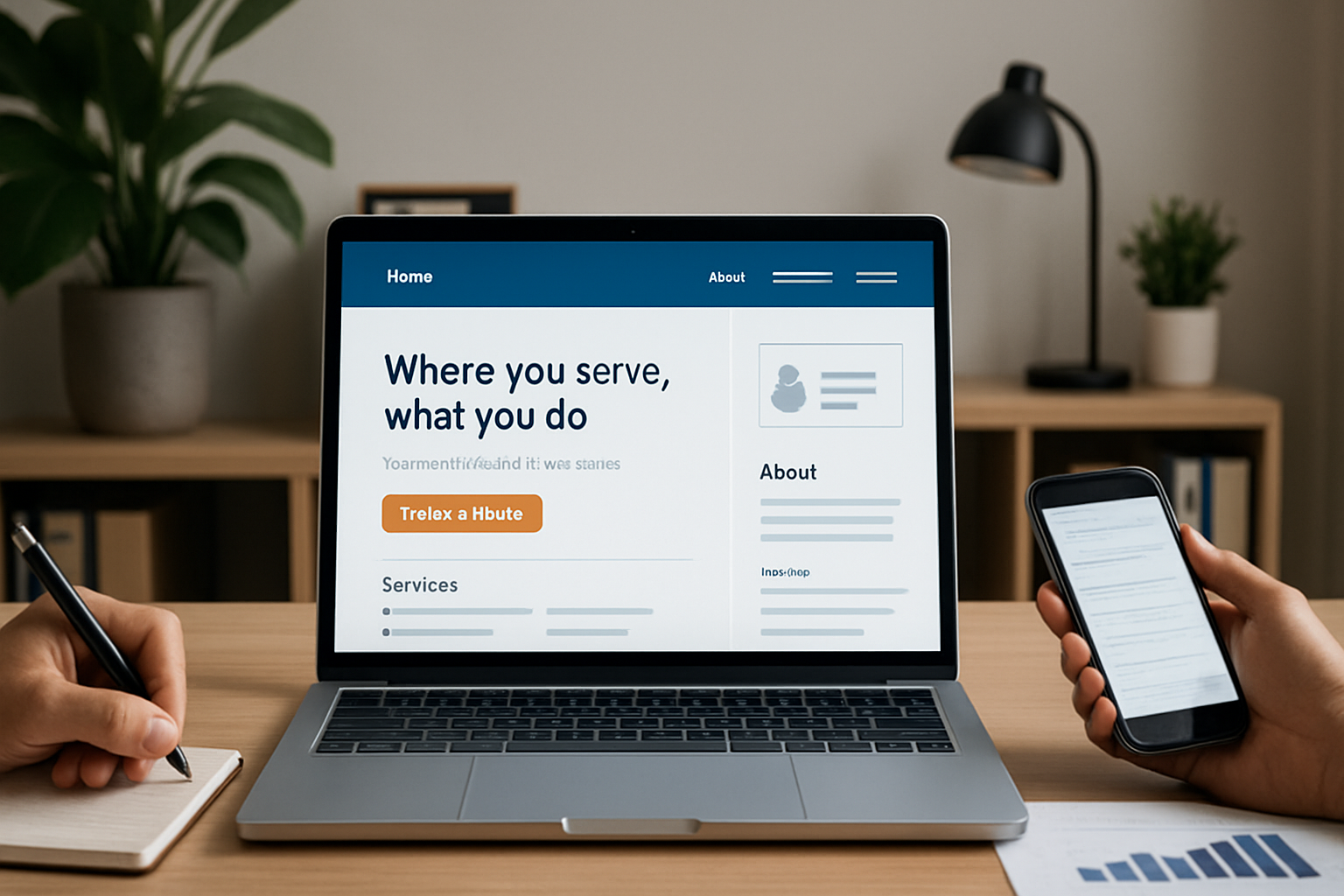
Creating a High-Impact SMB Website: Essential Tips for Success
For small and medium-sized businesses (SMBs), a strong website is no longer optional—it’s the foundation of your digital presence. A high-impact SMB website doesn’t just look good; it attracts qualified traffic, builds trust, and converts visitors into leads and customers. This guide walks you through the essential steps to create an SMB website that works hard for your business, day and night.
1. Define Clear Goals and Understand Your Audience
Before designing a single page, clarify what you want your website to achieve and who it’s for. A goal-driven, audience-focused site will always outperform a generic one.
Common SMB website goals include:
- Generating qualified leads and inquiries
- Driving phone calls or bookings
- Selling products or services online
- Building local visibility and foot traffic
- Educating prospects to shorten the sales cycle
Identify your ideal customers by asking:
- Who are my best customers today (industry, location, budget)?
- What problems are they trying to solve?
- What questions do they ask before buying?
- How do they search online for what I offer (keywords, phrases, questions)?
Use this information to shape your content, navigation, and calls-to-action (CTAs). For example, a local contractor might emphasize “free estimates” and “service areas,” while a professional services firm might focus on “case studies” and “consultation requests.”
2. Structure Your SMB Website for Clarity and Conversion
Your website’s structure should make it effortless for visitors to find information and take action. A logical layout also helps search engines understand and rank your pages more effectively.
Core pages every SMB website should include:
- Home page: A clear overview of who you are, what you do, where you operate, and how you help. Include your primary CTA (e.g., “Request a Quote,” “Book a Call,” “Shop Now”).
- Services / Products pages: One main services page plus separate, focused pages for each core service or product category. This improves SEO and lets you target specific keywords (e.g., “commercial cleaning,” “residential roofing repair”).
- About page: Share your story, experience, team, and what makes you different. This is vital for building trust, especially for local and B2B customers.
- Contact page: Make it easy to reach you—include a form, phone number, email address, business address, and map if you serve a local area.
- Testimonials / Reviews: Social proof from real customers, ideally with names, locations, or business names and (where appropriate) photos.
- Resources / Blog: Search-optimized articles, FAQs, and guides that answer common customer questions and demonstrate your expertise.
Best practices for navigation and layout:
- Limit top-level menu items to your most important sections.
- Use descriptive labels like “Web Design Services” instead of vague terms like “Solutions.”
- Include your phone number and a prominent CTA in the header.
- Use consistent CTAs across pages so visitors always know the next step.
3. Design for Trust, Mobile Users, and Conversion
Strong design does more than look polished—it communicates credibility and guides visitors toward taking action. For SMBs, trust and usability are critical.
Key elements of a high-impact SMB website design:
- Mobile-first experience: Most visitors will view your site on a phone. Ensure buttons are easy to tap, text is readable without zooming, and pages load quickly on mobile data.
- Clean, modern layout: Use plenty of whitespace, legible fonts, and a clear visual hierarchy. Avoid clutter and distracting animations.
- Consistent branding: Use your logo, brand colors, and tone of voice consistently to create a professional, memorable experience.
- High-quality images: Use original photos of your team, office, or projects where possible. Avoid overused, generic stock imagery that feels impersonal.
- Strong calls-to-action: Place clear CTAs above the fold and throughout each page. Examples include “Get a Free Quote,” “Schedule a Consultation,” or “Call Us Today.”
Trust-building elements to add to your SMB website:
- Verified customer reviews and testimonials
- Logos of clients or partners you work with (if allowed)
- Industry certifications, awards, and affiliations
- Clear policies (warranties, guarantees, returns, privacy)
- Secure site indicators (HTTPS, trusted payment gateways for e-commerce)
The easier it is for visitors to trust you and take the next step, the more leads and sales your website will generate.
4. Optimize for Search (SEO) and Local Visibility (GEO)
Search engine optimization (SEO) ensures that potential customers can find your SMB website when they look for the services you provide. Local and geographic optimization (GEO) is especially important if you serve a specific city, region, or service area.
On-page SEO essentials for SMB websites:
- Keyword research: Identify relevant keywords and phrases your ideal customers use (e.g., “plumbing company near me,” “IT support for small business,” “digital marketing agency in Chicago”).
- Title tags and meta descriptions: Write unique, descriptive titles and meta descriptions for each page that include primary keywords and your location where appropriate.
- Header tags (H1, H2, H3): Use headings to structure your content and naturally include your main keywords.
- SEO-friendly URLs: Use short, readable URLs like
/web-design-servicesor/roof-repair-denverinstead of long, cryptic strings. - Internal linking: Link between related pages (e.g., from your blog to service pages) to help users and search engines discover more of your content.
- Image optimization: Use descriptive file names and alt text that reflect what’s in the image and, when natural, your target keywords.
Local SEO and geo-optimization tips:
- Set up and optimize Google Business Profile: Complete your profile with accurate NAP (name, address, phone), hours, categories, services, photos, and service areas.
- Use consistent NAP data: Ensure your business name, address, and phone number are consistent across your website, directories, and social profiles.
- Create location-specific landing pages: If you serve multiple cities or neighborhoods, create separate, valuable pages for each (e.g., “HVAC Services in Austin, TX”). Include localized content and FAQs.
- Embed a map on your contact or location page: This helps both users and search engines connect your business to a specific area.
- Encourage online reviews: Ask satisfied customers to leave reviews on Google, Yelp, and industry-specific platforms. Respond professionally to all reviews.
When you combine basic SEO with strong local signals, your SMB website becomes a powerful driver of organic and local search traffic.
5. Create Content That Answers Real Customer Questions
Content is the engine behind both search performance and conversions. High-quality, useful content turns your website into a 24/7 salesperson that educates visitors and builds authority.
Types of content that work well for SMB websites:
- Service and product pages: Explain what you offer, who it’s for, what’s included, pricing structure (or “starting at” ranges), and what makes your solution different.
- Blog posts and articles: Answer frequently asked questions, explain processes, compare options, and share industry insights (e.g., “How to Choose a Commercial Cleaning Company,” “What to Expect During a Roof Inspection”).
- Case studies and success stories: Show real-world results with before-and-after snapshots, metrics, and client quotes.
- FAQs: Address common objections and concerns directly to reduce friction (e.g., timelines, budgets, guarantees, service coverage).
- Downloadable resources: Guides, checklists, or templates that help prospects take the next step and position your business as the expert.
Content best practices for SEO and conversions:
- Write in clear, simple language that your customers use.
- Include relevant keywords naturally—avoid keyword stuffing.
- Break up text with headings, short paragraphs, and bullet lists.
- Include CTAs within your content (e.g., “Have questions? Contact our team for a free consultation.”).
- Update older content regularly with fresh data, examples, and internal links.
Over time, a strategic content plan will help you attract more search traffic, nurture warmer leads, and close business faster.
6. Ensure Speed, Security, and Simple Maintenance
A high-impact SMB website must be fast, secure, and easy to maintain. Technical foundations might not be visible to visitors, but they dramatically affect user experience, conversions, and SEO.
Performance essentials:
- Fast hosting: Choose a reliable hosting provider with good uptime and performance. Slow websites drive users away and harm your rankings.
- Optimized images and media: Compress images and avoid using unnecessarily large files. Use modern formats like WebP where possible.
- Minimal unnecessary scripts: Remove unused plugins and third-party scripts that slow down your site.
Security and maintenance basics:
- Use HTTPS with a valid SSL certificate to protect user data.
- Keep your CMS, themes, and plugins up to date.
- Use strong passwords and two-factor authentication for admin accounts.
- Schedule automatic backups so your site can be restored if something goes wrong.
- Periodically test contact forms, checkout processes, and CTAs.
By prioritizing performance and security, you protect your reputation, keep visitors engaged, and support better rankings in search engines.
Conclusion: Turn Your SMB Website Into a Growth Engine
A high-impact SMB website is more than an online brochure—it’s a strategic asset that attracts qualified leads, builds trust, and drives revenue. By defining clear goals, structuring your site for clarity, designing for trust and usability, optimizing for SEO and local visibility, publishing helpful content, and maintaining strong technical foundations, you create a website that supports your business around the clock.
If you’re ready to transform your SMB website into a true growth engine, start by auditing your current site against the steps above. Identify the biggest gaps, prioritize quick wins, and then tackle one improvement at a time. Need expert help planning or building your next SMB website? Reach out today to discuss your goals and get a tailored plan for your business.