Should You Invest in Core Web Vitals for Better SEO and Conversions?
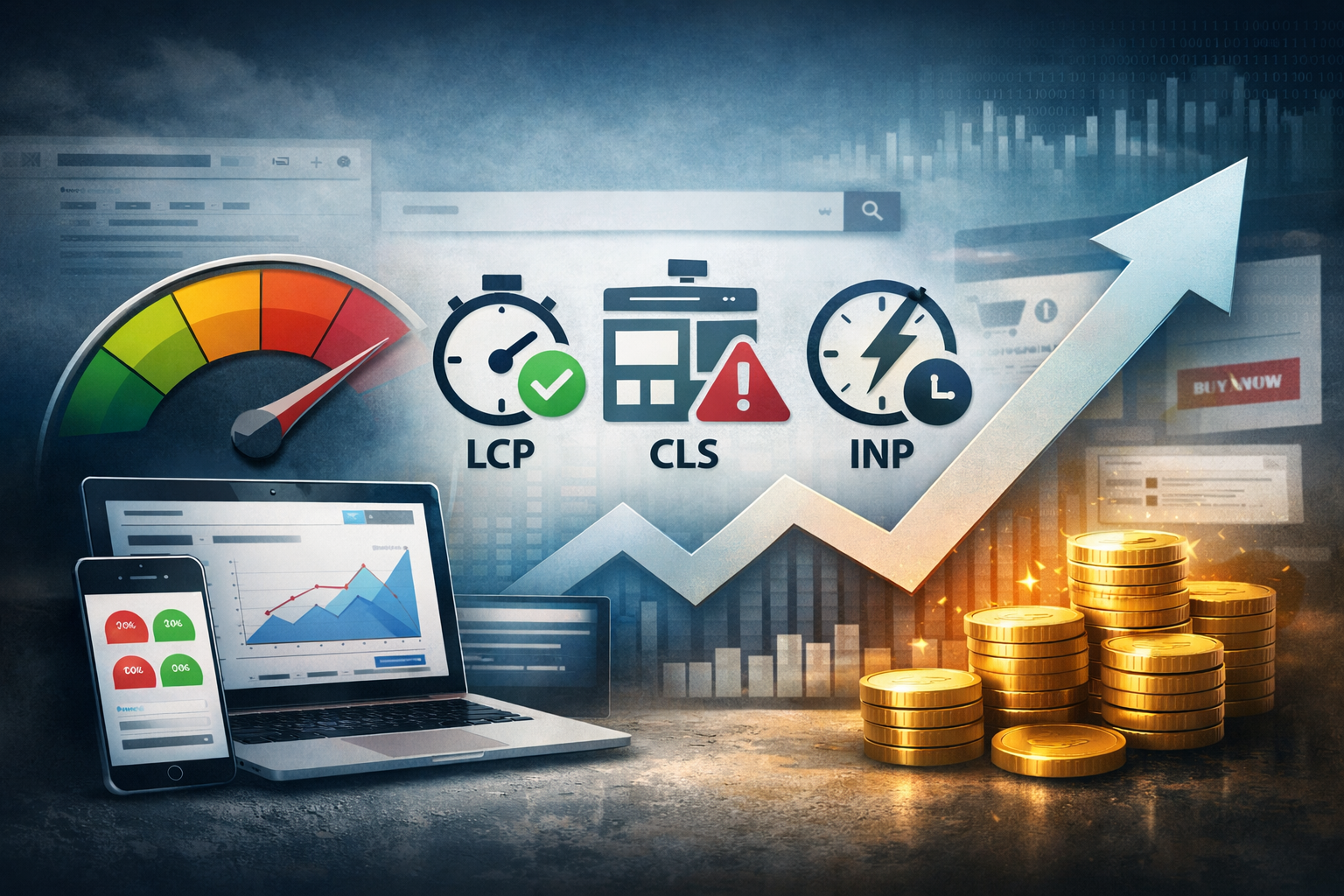
Website speed and Core Web Vitals (CWV) clearly matter. But should you move them to the top of your budget list right now? For many WordPress sites, there is a real SEO and conversion payoff from performance work. For others, speed is a secondary win behind content, offers, and tracking. This quick diagnostic will help you decide if improving CWV and page speed should be a near-term priority, what kind of gains to expect, and when it makes sense to bring in a WordPress performance partner like Ascent Digital Media.
Step 1: Quick Diagnostics – Do You Actually Have a Speed Problem?
You can answer most of this in 10–15 minutes.
1. Check your Core Web Vitals status
- Open Google Search Console > Experience > Core Web Vitals.
- Look at “Poor”, “Needs improvement”, and “Good” URLs for mobile first.
If you see:
- Mostly Good: CWV is probably not your #1 bottleneck.
- Lots of Poor/Needs Improvement (especially mobile): Performance is hurting your visibility and UX.
2. Test real page speed
- Use PageSpeed Insights or WebPageTest on:
- Homepage
- Top 2–3 product/service pages
- Key landing pages (ads, email, etc.)
Pay attention to:
- Largest Contentful Paint (LCP) – target under 2.5 seconds.
- Cumulative Layout Shift (CLS) – target under 0.1.
- Total Blocking Time (TBT) / Interaction to Next Paint (INP) – how responsive the page feels.
3. Compare speed against business outcomes
Check your analytics (GA4, etc.):
- Do mobile users bounce more than desktop visitors?
- Are conversion rates lower on slower pages?
- Do paid traffic landing pages load slower than the rest of the site?
If your worst pages are also your most valuable pages (traffic, leads, sales), CWV and performance fixes move much higher on the priority list.
Step 2: When Speed & CWV Will Move the Needle
You’ll likely see measurable SEO and conversion gains from performance work if:
- You rely on organic search for leads or sales, and Search Console shows CWV issues on key URLs.
- Your WordPress site is slow on mobile (especially above 3–4 seconds for LCP).
- You run paid search or social ads to pages that score poorly in PageSpeed Insights.
- Your industry is competitively similar (similar content/offers) and you need an edge in rankings and UX.
- Users complain about the site being “slow”, “laggy”, or “jumping around” when they try to click.
In these cases, realistic outcomes from a focused performance/CWV project often include:
- Faster rankings movement for pages already on page 2–3.
- Higher conversion rates from mobile visitors and ad campaigns.
- More form fills, calls, and cart completions because the site simply feels easier and less frustrating.
Think of CWV as a multiplier: the better your content and offers already are, the more you’ll notice the uplift when pages load quickly and respond instantly.
Step 3: When CWV Isn’t Your First Priority
There are also clear situations where CWV shouldn’t eat your next budget cycle.
Speed probably isn’t your #1 issue if:
- Your site loads in under ~2.5 seconds on mobile, with mostly “Good” CWV in Search Console.
- You get very little traffic from organic search or paid campaigns right now.
- Your content and offers are clearly weak or outdated (no compelling value prop, no clear CTAs, thin pages).
- Your tracking is broken. If you can’t measure leads and sales reliably, you won’t be able to prove ROI from performance work either.
In those cases, your next dollar is often better spent on:
- Improving service/product pages and landing page messaging.
- Fixing analytics and basic conversion tracking.
- Building content that can actually rank for relevant terms.
Once those foundations are in place, performance and CWV tuning can amplify the results.
Step 4: Fast ROI Opportunities for WordPress Sites
If your quick diagnostics say “yes, speed is a problem”, you don’t always need a full rebuild. Many WordPress sites see big wins from targeted work.
High-ROI areas to consider:
- Hosting & CDN
- Move off ultra-cheap shared hosting.
- Use a performance-oriented WordPress host plus a CDN (for example, Cloudflare, Fastly, or host-provided CDNs).
- Theme & plugins
- Audit and remove heavy, unused, or outdated plugins.
- Replace bloated page builders or themes with leaner options.
- Media optimization
- Compress and resize large images; use modern formats (WebP where appropriate).
- Lazy-load offscreen images and embeds.
- Caching & code optimization
- Enable full-page caching and browser caching.
- Minify and combine CSS/JS when safe; defer non-critical scripts.
- Layout stability
- Reserve space for images, videos, and ads to reduce layout shifts (CLS).
- Fix “jumping” headers, fonts, and forms.
For a small to mid-sized WordPress site, a focused performance sprint like this often fits into a manageable budget and timeline, especially compared with a total redesign.
Step 5: A Simple Decision Checklist
Use this to decide if you should invest in CWV and speed fixes now or plan them for later.
Prioritize CWV/speed in the next 1–3 months if:
- Search Console shows Poor/Needs improvement CWV for important pages.
- Mobile load time is 3+ seconds and those pages matter for leads or sales.
- You’re actively spending on SEO or paid traffic and sending visitors to slow pages.
- You already have solid content, strong offers, and working analytics.
- Competitors’ sites feel noticeably faster or smoother than yours.
Defer CWV/speed a bit if:
- CWV is mostly Good and users aren’t complaining about speed.
- You’re not yet getting meaningful traffic or conversions to measure.
- Your biggest weaknesses are strategy, messaging, or tracking, not load time.
If you’re in the middle—some issues, some strengths—you don’t need to guess. A short performance audit can quantify how much you’re likely leaving on the table.
How Ascent Digital Media Can Help You Decide (and Execute)
Ascent Digital Media works with SMBs, B2B companies, and agency partners across New Jersey and beyond to make WordPress sites faster, more reliable, and easier to convert on. Our team combines WordPress development, website performance audits, Core Web Vitals optimization, hosting/CDN tuning, and analytics so you’re not just chasing green scores—you’re improving leads and revenue.
If you’re unsure whether CWV and speed fixes should be your next investment, we can:
- Review your current performance, CWV, and analytics data.
- Identify the specific pages and issues that are holding you back.
- Outline a focused, budget-aware plan that connects technical work to real business outcomes.
When you’re ready, reach out to Ascent Digital Media to talk through your WordPress site, SEO and GEO goals, or broader digital marketing challenges. We’ll help you decide whether website performance should be at the top of your roadmap—and if it is, we’ll make the improvements measurable.