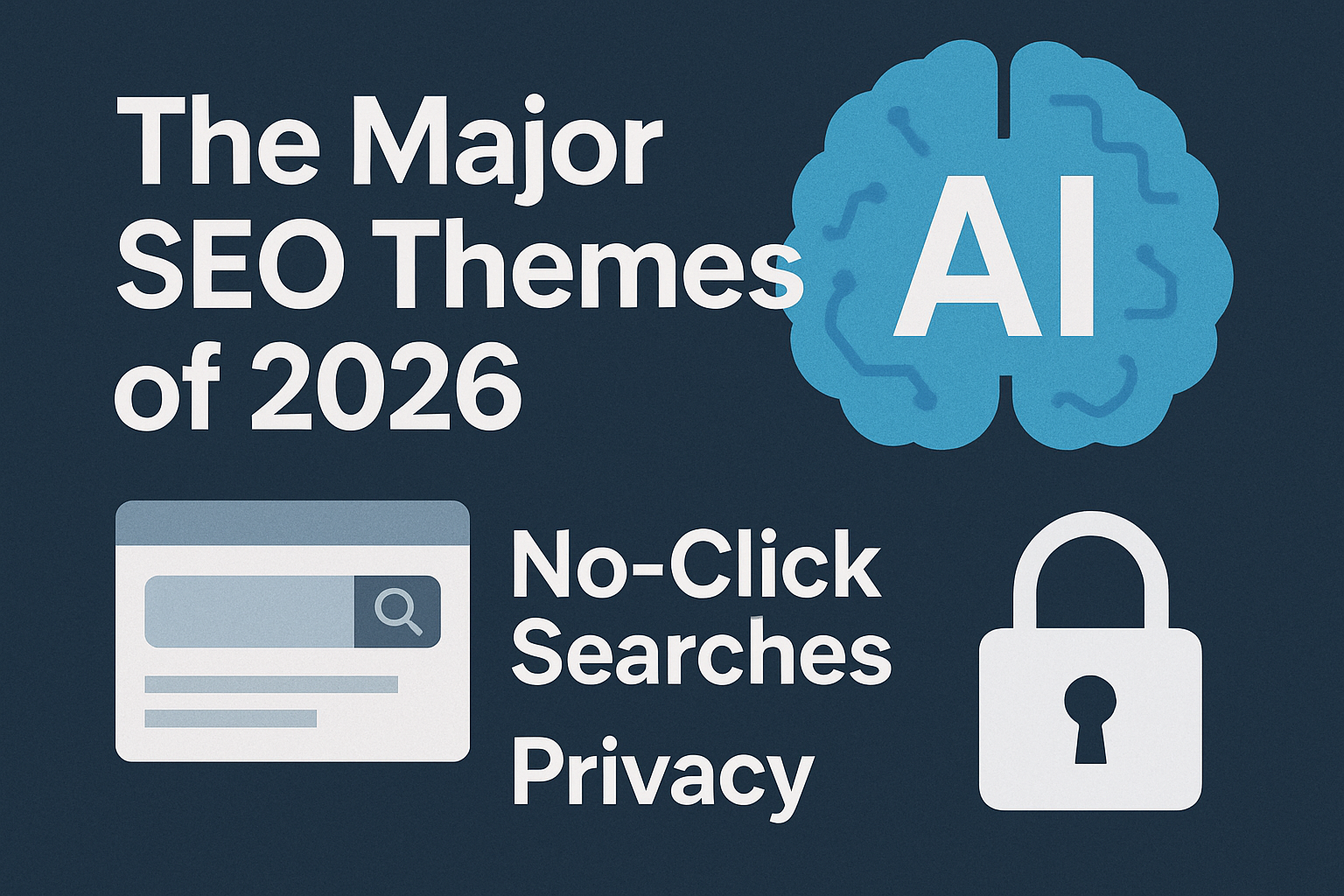
The focus of our SEO approach in 2026 can be summarized with two letters: AI.
2026 was truly the year in which AI platforms established themselves as a dominant force in both B2B and B2C user behaviors. While Google still dominates traditional search engines, a continually increasing share of users are now utilizing sources such as ChatGPT, Gemini, etc. as their primary method of looking up information and finding answers. The trend of AI use could not be ignored, and just like the reality with traditional search, “if you build it, they will come” does not apply to AI. It must be targeted proactively.
As a result, much of our focus throughout the year was to ensure that our strategic approach and tactical methods targeted both forms of search. And the results have been encouraging. The simple reality is: our strategy remains bulletproof and effective, because it was intentionally created to withstand the changing tides of the SEO landscape. The bottom line? Content is still king.
Whether a user chooses Google or an AI platform, their needs are the same – to find relevant information that answers their query. And the goal of Google and AI platforms can always be counted on to be very simple: keep users on their platform. Therefore the strategy of prioritizing the continual creation of new, highly relevant content is still the most effective means to answer everyone’s needs. When we provide the engines with highly relevant answers to user’s queries, we will always maximize our visibility.
Tactically, some evolution has been required. Content formatting has been evolving to be easier for AI platforms to parse and incorporate into answers, and we have been adjusting the site’s codebase to increase its use of the metadata and schema settings that are high priority for AI platforms.
While the first theme of the year was visibility, the second theme was the opposite. Two factors have been increasing challenges globally in the world of SEO, and both have the potential to negatively impact site visitation and tracking.
Factor One: the proliferation of “no-click search results”
As a result of both AI and traditional search engines seeking to provide answers with citations — rather than providing links to where the user can find their answer. At the time of writing, approximately 68% of all Google searches no longer result in a click through to an external website. And case in point, we found that statistic via a no-click search! As a result, many sites all over the world are seeing reductions in search visitation despite their best SEO efforts.
Factor Two: Increasing restrictions on tracking in the name of user security and privacy.
Highlighted by increasingly aggressive litigation attempts (primarily out of California), the need to seriously handle user privacy became too signficant to be considered optional. Websites no longer consider it optional to offer the user the opportunity to decline cookies and tracking – instead, the requirement has become for a website to default to blocking tracking – and only enable it if a user expressly opts in. Furthermore, some web browsers are now blocking all tracking by default unless a user actively opts in. The result of these measures is not less visitation — but it is less visibility into the quantity of users and their activities.
Combined with no-click search, these privacy enhancements create a potential “one-two punch” of decreased site visitation and decreased tracking and visibility. SEO and AI-targeted “GEO” (Generative Engine Optimization) remains as important as ever despite these challenges – and it’s never been more important to combine a rock-solid strategy with down-to-the-minute tactical agility.